# Gypsy Tokenomics

An overview of the flow of money in the Gypsy protocol

<figure><img src="https://2253381464-files.gitbook.io/~/files/v0/b/gitbook-x-prod.appspot.com/o/spaces%2FdxUWriqeWnT10gsipzKh%2Fuploads%2FfoF3l8GSQM38SJXPKCMI%2FLOGO%20(1).png?alt=media&amp;token=f661e1a3-8c80-4fb9-a7b1-54cca6db783d" alt=""><figcaption></figcaption></figure>

## Overview <a href="#overview" id="overview"></a>

The goal of the protocol and tokenomics is to facilitate a real estate ecosystem between renters, investors, and Gypsy in a way that:

1. Enables rent-to-own for renters
2. Renters are able to move between homes all over the world easily
3. Highly profitable for investors
4. Enables the protocol to purchase more properties
5. Profitable for the REIT so that it can grow its operations

## Tokens

<table><thead><tr><th>Token</th><th width="247">Classification</th><th>Standard</th></tr></thead><tbody><tr><td><a href="broken://pages/0Q5ByRT7nzevOqzBGHEm">USDG</a></td><td>Fiat Stablecoin</td><td>ERC-20</td></tr><tr><td><a href="broken://pages/gJUCb0OPL9S3z0Ddt4Pd">GPSY</a></td><td>Home Equity</td><td>ERC-1400</td></tr><tr><td><a href="broken://pages/4eBYqSzsq5zEjN0UHcWg">sGPSY</a></td><td>Rent Earning Home Equity</td><td>ERC-4626</td></tr></tbody></table>

To learn more about the protocol:

{% content-ref url="/spaces/hSaK8pBY13Mwl8twQK7F" %}
[Protocol](https://docs.gypsytoken.org/protocol/)
{% endcontent-ref %}


# USDG

USD Gypsy (USDG) is a fully-reserved stablecoin on the Ethereum blockchain and is always redeemable 1:1 for U.S. dollars.

USDG's price is pegged to $1 USD. Its peg mechanism uses a simple 100% collateralization approach. This means that for every 1 USDG in circulation, there is $1 USD held in reserve.

USDG is designed for Defi applications that need a transparent programable currency that can easily be on-ramped and off-ramped. You can monitor USDG's backing in real time on the explorer page.

## Gypsy aims to fix problems that plague existing fiat-stablecoins

1. Maintaining a 1:1 ratio
2. Transparency
3. High limits on minimum deposits & withdrawals

### True 1:1 Backing

Gypsy’s USDG maintains a 1:1 backing of holding only USD and other cash equivalents.

### Blockchain-level Transparency

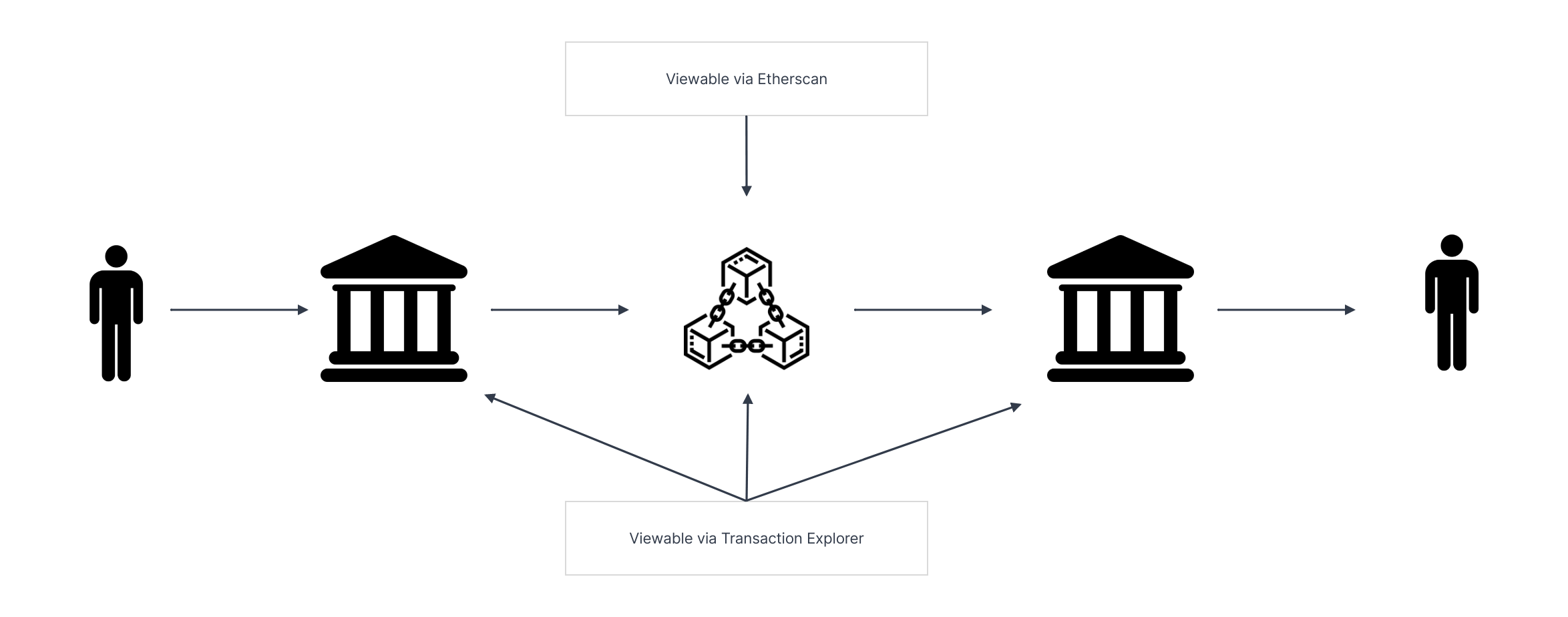
Gypsy is in the process of developing a [**Transaction Explorer**](broken://pages/1A1vi4fgyNU2iGzPKnjs). This feature allows anyone to see every transaction between fiat and stablecoin and vice versa. The transaction explorer also lets you directly see the treasury assets as well as USDG in circulation. This allows the world to audit them at any time, not just once a quarter. It also calculates the ratio of fiat in the bank account to coins in circulation.

### A Fiat-Stablecoin for everyone

Gypsy enables investors to connect their bank accounts to their Gypsy accounts. With this, users can convert between USD and USDG with as little as $10. This enables everyone, not only large institutions, to control the supply of USDG in the crypto economy.&#x20;

## Purchase GPSY

Purchase GPSY makes the investor a fractional owner of a global network of homes that are rented out to produce yield.&#x20;

## Supply  <a href="#ebdd" id="ebdd"></a>

Supply: No supply cap

$USDG is minted when

* A user purchases USDG with USD

$USDG is burned when&#x20;

* A user withdrawals to USD

## Price Stability Mechanisms <a href="#ebdd" id="ebdd"></a>

A price stability mechanism is a system or set of rules that are designed to keep prices stable. In the case of USDG the goal of these price stability mechanisms is to maintain USDG's price at 1 USD.

### **The USDG Target Price** <a href="#the-dai-target-price" id="the-dai-target-price"></a>

The USDG Target Price is used to determine the value of [collateral assets](broken://pages/p0WngVqijJIn5OehD3Cg) USDG holders receive in the case of an Emergency Shutdown. The Target Price for USDG is 1 USD, translating to a 1:1 USD hard peg.&#x20;

### Withdrawal to USD

Gypsy allows easy and quick withdrawals to USD from USDG at a 1:1 exchange rate. This helps maintaine price stability because USDG holders will be unwilling to sell their USDG for less than $1 as they can easily and quickly go to gypsytoken.org and redeem USDG for USD.

### **Arbitragers** <a href="#keepers" id="keepers"></a>

An arbitrager is an independent (usually automated) actor that is incentivized by arbitrage opportunities to provide liquidity in various aspects of a decentralized system. In the Gypsy Protocol, arbitragers are market participants that help USDG maintain its Target Price ($1): they sell USDG when the market price is above the Target Price, and buy USDG when the market price is below the Target Price.

#### **Risks:**

Arbitragers will only perform their price stability when they have the faith that USDG is fully backed by USD. This is why Gypsy provides the Transaction Explorer so that arbitragers can view the live backing of USDG.

## Distribution <a href="#id-35bf" id="id-35bf"></a>

USDG is minted and distributed to an individual who purchases USDG for 1 USD.

## KYC

KYC stands for Know Your Customer and is a set of identity verification rules that most exchanges have to follow to abide by local laws. This might include submitting scans of state or federal ID, or sending in your government ID numbers like a Social Security Number if you live in the US. You'll be guided through whatever KYC process your exchange of choice has.


# USDG Backing Assets

How USDG maintains its 1:1 peg

Besides maintaining a hard 1:1 peg, the actual cash reserves are deployed to limit storage liability yet maintain high liquidity. Gypsy's holdings can be seen in real-time on the [explorer page](https://gypsytoken.org/explorer) on gypsytoken.org. Gypsy will post monthly documents going over holdings&#x20;

### Asset breakdowns are as follows:

<figure><img src="https://2253381464-files.gitbook.io/~/files/v0/b/gitbook-x-prod.appspot.com/o/spaces%2FdxUWriqeWnT10gsipzKh%2Fuploads%2F7IMsYcpzxx0IY4RaXrgx%2Fimage.png?alt=media&amp;token=16521234-1bb8-4041-915c-921892554951" alt=""><figcaption></figcaption></figure>

<table><thead><tr><th width="572">Holding</th><th>Percentage</th></tr></thead><tbody><tr><td>Cash &#x26; Cash Equivalent &#x26; Commercial Paper</td><td>90%</td></tr><tr><td>Corporate Bonds &#x26; Funds &#x26; Precious Metals</td><td>4.5%</td></tr><tr><td>Secured Loans (none to affiliated entities)</td><td>5.5%</td></tr></tbody></table>

### Cash & Cash Equivalent & Commercial Paper breakdown:&#x20;

<figure><img src="https://2253381464-files.gitbook.io/~/files/v0/b/gitbook-x-prod.appspot.com/o/spaces%2FdxUWriqeWnT10gsipzKh%2Fuploads%2FBSq8oAEIUKwPzYq6huDu%2Fimage.png?alt=media&amp;token=08039c8f-8ae7-461e-be25-7462109b87d0" alt=""><figcaption></figcaption></figure>

<table><thead><tr><th width="589">Holding</th><th>Percentage</th></tr></thead><tbody><tr><td>U.S. Treasury Bills</td><td>55%</td></tr><tr><td>Commercial Paper &#x26; Certificate of Deposits</td><td>29%</td></tr><tr><td>Money Market Funds</td><td>9.8%</td></tr><tr><td>Cash &#x26; Bank Deposits</td><td>5.8%</td></tr><tr><td>Non-U.S. Treasury Bills</td><td>0.4%</td></tr><tr><td>Reverse Repurchase Agreement</td><td>1%</td></tr></tbody></table>

## How does $USDG manage its backing holdings?

Gypsy holds all cash deposited throughout the day and makes a purchase of non-cash assets at 12 pm EST every day. If there is a large withdrawal from USDG holders, then Gypsy will automatically begin selling non-cash assets for cash to always maintain liquidity.&#x20;


# End-to-End Transparency

<figure><img src="https://files.gitbook.com/v0/b/gitbook-x-prod.appspot.com/o/spaces%2FinYZsl6F3DP3HXrxSZsm%2Fuploads%2Fz6rOgZ41SBA1I4IrLxfm%2Fcanvas_e2e-transparency-220914_1540.png?alt=media&#x26;token=2b05f330-ba9e-44f6-9d45-e624869bbd9c" alt=""><figcaption></figcaption></figure>

USDG aims to bring blockchain-level transparency to fiat-stablecoins as well as other real-world asset collateralized tokens. This can be anywhere from a REIT owning income-generating properties or an autonomous network of cars that earn money for transporting the public.

## Benefits <a href="#benefits" id="benefits"></a>

### USDG holder confidence <a href="#usdg-holder-confidence" id="usdg-holder-confidence"></a>

When a user purchases 1 USDG with 1 USD the transaction is logged at the time of minting and burning. This makes it possible to provide a real-time view of the exact amount of funds backing USDG

### Provides transparency for Gypsy expenses <a href="#provides-transparency-for-gypsy-expenses" id="provides-transparency-for-gypsy-expenses"></a>

E2E transparency enables investors to see in real-time, the costs of operations of GPSY as well as gives investors confidence that funds are being spent both reasonably and responsibly.


# GPSY

Tokenized Real Estate

Gypsy Token (GPSY) is a security token backed by a portfolio of yield-bearing real estate on the Ethereum blockchain. GPSY's price is backed by real estate equity in a portfolio of global homes as well as cash reserves held by the REIT.

Security Tokens share many of the characteristics of both fungible (erc20) and non-fungible tokens (erc721). Security tokens are designed to represent complete or fractional ownership interests in assets and/or entities. While utility tokens have no limitations on who can send or receive the token, security tokens are subject to many restrictions based on identity, jurisdiction and asset category.

Security tokens are called investment contracts, and they must meet several conditions. These tokens are subjected to securities and regulations. In simple terms, security tokens on blockchain will get their value from tradable and external sources. For this reason, they will always be subject to government regulations.

### ERC-3643 Standard

{% embed url="<https://eips.ethereum.org/EIPS/eip-3643>" %}

The ERC-3643 standard is an open-source suite of smart contracts that enables the issuance, management, and transfer of permissioned tokens. $28bn worth of assets has been tokenized through ERC-3643. ERC3643 enables issuers to mint and manage identity-based permissioned tokens to enforce compliance.These tokens only allow users who meet eligibility rules to become token holders by verifying the credentials of users’ digital identities. These credentials are issued by third parties of the issuers’ choices, be it a KYC provider, a bank or a government, etc. The identity-based whitelisting approach makes ERC3643 the most suitable standard for digital securities, as it ensures compliance while enabling on-chain and automated validation processes. Thus, compliant peer-to-peer transfers of digital securities are allowed, enabling their transferability. Aside from ensuring compliance, ERC3643 has more than 120 smart contract functions, enabling issuers to fully control their digital securities such as blocking and unblocking tokens, performing bulk operations and delegating responsibility for operations to third parties.

\
ERC3643 is trusted by large financial institutions whereby making it the standard for digital securities. In addition, it has also been audited by Kaspersky (one of the world’s leading cybersecurity firms) ensuring the security of the code. This standardization is the catalyst for the adoption of tokenization as it allows all participants to rely on the same logic and functionality; stakeholders don’t need to waste time reinventing the wheel but directly benefit from an interoperable ecosystem.

## Utility

### **Purchase a home**

Purchasing a home with GPSY is like exchanging property equity for a physical property. Properties owned and maintained by Gypsy will be purchasable from the Gypsy website as well as through NFT marketplaces. When an individual buys the home Gypsy will take the home off the market and work directly with the purchaser to transfer the ownership of the SPV to the buyer. The home comes fully furnished with everything that was included in the property. The price of the home is priced as such:

$$
HomePriceInGypsy = \frac{HomePriceUSD}{PriceOfGypsy}
$$

## Staking

Holding Gypsy tokens alone does not earn rental income. To earn the rental income you must stake your Gypsy and get LGypsy.


# Token Valuation

<figure><img src="https://2253381464-files.gitbook.io/~/files/v0/b/gitbook-x-prod.appspot.com/o/spaces%2FdxUWriqeWnT10gsipzKh%2Fuploads%2FxWz4E9qtebLhXel5qNnX%2Fimage.png?alt=media&amp;token=0f861da6-5d0d-4480-a923-9d3075a6824b" alt=""><figcaption></figcaption></figure>

REITs determine the value of their properties through a combination of market data, professional appraisals, and accepted appraisal methods. Appraisals consider the property's physical characteristics, location, and economic conditions. REITs hire appraisers to conduct appraisals and consider factors such as property size, age, condition, and local real estate market supply and demand. The appraisal, along with market data, is used to estimate the net asset value (NAV) of the property and is included in the REIT's portfolio valuation.

Gypsy will, at minimum, once a year has a property appraised to ensure an accurate depiction of the fair market value of the token backing.

### Backing Price

The backing price is the estimated value per token. Each token is backed by the Gypsy Treasury, which holds real estate and fiat.&#x20;

The backing price is determined by first getting the NAV or net asset value of the Gypsy Treasury. This is the sum of all the assets held. To do this, we sum up all of the most recent home appraisal prices and add them to the number of stablecoins held.

$$
NAV=\sum\_{}^{}HomeAppraisals + TreasuryStablecoins
$$

After the NAV is determined we need to divide it by the current supply of Gypsy. This gets the assets held per token.&#x20;

$$
GypsyBackingPrice = \frac{NAV}{GypsySupply}
$$

## Real-time token valuation

Gypsy has partnered with Parcl labs to bring on-chain real-time token valuation. The Parcl Price Feeds and the Parcl Protocol will provide real-time, representative, and comprehensive residential real estate pricing and enable a liquid market for real estate exposure.

The Parcl price feed provides an oracle that enables these price feeds to be used in smart contracts and Defi protocols. It is essential to have an on-chain price for a token to be used as collateral in Defi borrowing protocols to maintain the integrity of the stablecoin that is borrowed.

### Calculating NAV with Parcl Price Feed

$$
RealTimeNavEstimate=\sum\_{n}^{n=TotalHomes}PPF(Homes\_{n}) + TreasuryStablecoins
$$

$$
GypsyEstimatePrice = \frac{RealTimeNavEstimate}{GypsySupply}
$$

## Gypsy's Hybrid Approach

Gypsy will initially start off the protocol using standard NAV evaluation by using human appraisers with a plan to switch to real-time price evaluation as the PPF is ready. As for now, Gypsy will distinguish these two different price estimates as the **fair value** and **estimated value**.&#x20;

**The fair value:** is the price per token as estimated by the appraisers&#x20;

**the estimated value:** will be a real-time token valuation as determined by the Parcl price feed.&#x20;

This hybrid approach is selected to allow investors to see an estimated, real-time estimate for their token backing while still ensuring the backing is representative of appraisal pricing.<br>


# Minting

How Gypsy prevents diluting old investors

One of the major benefits of Gypsy's protocol is its potential for growth far exceeds traditional REITs. The way it does this is by following these rules when purchasing Gypsy tokens:

1. If GPSY on-chain price is above Backing Price, mint new Gypsy tokens at the backing price
2. If GPSY on-chain price is below Backing Price, purchase Gypsy tokens from an exchange

These rules provide both price stability at the backing price of Gypsy as well as enable new investors to enter without diluting current token holders.

## Rule 1: Buying Gypsy when the price is equal to or above the backing price

When the price of Gypsy is above that of the backing price, it means there is an influx of individuals buying more Gypsy. Instead of those investors buying existing gypsy at an overvalued price, the protocol instead mints new tokens at the backing price.&#x20;

#### Results of minting the new token:

* Gypsy's supply goes up
* Gypsy's price goes down if above backing & stays the same if the backing price is at the token price
* Gypsy's on-chain price returns to around the backing price
* Gypsy gets the funding to purchase the next home

### Minting new Tokens

The new tokens are minted based on the following formulas

$$
GypsyMinted=\frac{UsdgPaid($)}{GypsyBackingPrice($))}
$$

$$
NewTokenSupply=GypsyMinted+CurrentTokenSupply
$$

### Example:

​With a theoretical NAV of $1M and 1000 tokens in circulation, the price per Gypsy is $1000. If the current on-chain price of GPSY is $1000 and a new investor purchases $500,000 worth of Gypsy the following will occur:

Since the price of Gypsy is at the backing price, new tokens will be minted. Following the formula, the NAV + UsdgPaid is 1.5M and the token supply is 1000. The resulting token circulation will be 1500 with 500 new Gypsy minted. The resulting price per token is 1.5M / 1500 which is $1000.&#x20;

## Rule 2: Buying Gypsy when the price is below the backing price

When the price of GPSY falls below the backing price, Investors then purchase Gypsy from exchanges. These investors would purchase GPSY "at a discount" to the NAV of the portfolio.&#x20;

#### Results of buying the existing token:

* Gypsy's price goes up
* Gypsy's on-chain price returns to around the backing price

## What does this enable?

This mechanism for purchasing new tokens enables the following.

### Rent-to-own

Rent-to-Own allows a portion of rental payments to be used to reinvest in the fund. Rental payments are collected and used in the fund to buy more properties, generating rental income and appreciation.

### Compounding Rental income

Compounding rental income is a direct result of reinvesting rental income into the NAV to buy more homes. This then increases the NAV of the Gypsy properties as well as the rental income earned every month.

### Hyper Growth

New investors are able to invest in Gypsy without diluting current investors. This allows Gypsy's portfolio of homes to continuously grow.&#x20;


# Burning

Burning is only done when real estate leaves the Gypsy protocol. This will happen in the event of an individual buying a home with GPSY and requesting the ownership transfer.\
\
This will burn tokens based on the following formula.

$$
GypsyBurned=\frac{HomePriceInUSDG($)}{GypsyBackingPrice($))}
$$


# Liquidity

Real estate-backed tokens often suffer from a lack of liquidity. These tokens are often [regulation D tokens](https://medium.com/swlh/regulation-d-a-love-hate-story-in-american-securities-ee4aead746a2) where each home has its own tokens and tokens are traded via market book order or AMM's. The combination of all of these factors makes the tokens illiquid and less suitable for integration with defi. Regulation D tokens also are only available to accredited investors.

Gypsy takes a different approach to token liquidity with goals to have high liquidity, no lockup periods, and accurate token pricing to make a powerful tool for defi and yield farming.

## Singular token to back all properties

There are several reasons why having a real estate-backed cryptocurrency token that is backed by an entire portfolio of homes may be more liquid than having each home having its own token.

## Risk diversification

A single token that is backed by a portfolio of homes helps diversify risk. If each home had its own token, the value of the token could be 100% dependent on the specific characteristics and performance of that individual home. In contrast, a portfolio of homes is likely to have a more diverse set of characteristics and may be less vulnerable to changes in the market or other factors that could affect the value of a single home. This can make the GPSY token more stable and potentially more attractive to investors.

## Easier to invest

A single token may be more convenient for investors. Instead of having to track and manage multiple tokens for different homes, investors can simply hold and trade a single token that represents a diverse portfolio of homes. This can make it easier for investors to buy and sell the token, which can increase liquidity.

## Concentrated Trading Volume

A real estate-backed cryptocurrency token that is backed by an entire portfolio of homes can enable all trading volume to be concentrated in a single token, which can increase the volume traded and help with price discovery & token liquidity.

When there is a large volume of trading activity for a particular asset, it can provide a better indication of the market's sentiment and help to determine the fair market value of the asset. This can be especially important in the real estate market, where prices can vary significantly based on factors such as location, property type, and market conditions. By having a single token that represents a diverse portfolio of homes, it can facilitate a higher volume of trading activity and provide a clearer indication of the market's valuation of the underlying assets.


# Gypsy Backing Price

The backing price is the estimated value per token. Each token is backed by the Gypsy Treasury, which holds real estate and fiat.&#x20;

The backing price is determined by first getting the NAV or net asset value of the Gypsy Treasury. This is the sum of all the assets held. To do this, we sum up all of the most recent home appraisal prices and add it to the amount of cash held.

$$
NAV=\sum\_{}^{}HomeAppraisals + TreasuryCash
$$

After the NAV is determined we need to divide it by the current supply of Gypsy. This gets the assets held per token.&#x20;

$$
GypsyBackingPrice = \frac{NAV}{GypsySupply}
$$

The Gypsy Backing price is displayed on the protocol page of the app. The backing ratio is the percentage of the NAV that is real estate.&#x20;

<figure><img src="https://2253381464-files.gitbook.io/~/files/v0/b/gitbook-x-prod.appspot.com/o/spaces%2FdxUWriqeWnT10gsipzKh%2Fuploads%2FCIhgy4elDGKk7hsGlmlk%2Fimage.png?alt=media&amp;token=73f4c7b2-68b4-4e98-9136-b26b41649efe" alt=""><figcaption></figcaption></figure>


# Price Stability Mechanisms

A price stability mechanism is a system or set of rules that are designed to keep prices reflective of the real estate portfolio value. Price stability is an important aspect of real-world asset-backed tokens to be used in Defi. The ability to maintain a stable price makes a token safe to use in Defi protocols as collateral without the risk of unjust liquidation.&#x20;

The gypsy protocol is designed with these price stability mechanisms to keep the token’s on-chain price representative of the value of the real estate portfolio.

### Gypsy purchasing rules

When the Gypsy price is above the backing price, this will cause new Gypsy to be minted and purchased. This will cause the price of GPSY to fall toward the backing price.&#x20;

When the Gypsy price is below the backing price, this will cause the newly purchased Gypsy to come from a decentralized exchange. This will cause the price of GPSY to rise toward the backing price.

Learn more about how GPSY is minted [here](/tokenomics/tokens/gpsy/minting)

### One token to back all homes

The use of one token to back all of the homes causes the trading volume to be concentrated in a singular asset. Higher volume will result in better price discovery and help GPSY maintain the backing price.

### Daily Rental Income

Gypsy distributes its rental income linearly over the month to all LGPSY holders. In the case that investors are withdrawing their GPSY from LGPSY in order to sell, it will increase the APY of the protocol for those users who are still staked. This APY increase should incentivize investors to buy and stake GPSY.&#x20;

### Arbitragers

In the Gypsy Protocol, Arbitragers are market participants that help GPSY maintain its Backing Price: they sell GPSY when the market price is above the Backing Price, and buy GPSY when the market price is below the Backing Price.


# LGPSY

Earn Rental Income

LGypsy is a yield-bearing vault, which in DeFi are assets that provide some form of added gain on top of ordinary asset-holding. In the case of Gypsy, LGypsy is staked Gypsy tokens that earn rental income & home appreciation. Rental income is paid in the form of more Gypsy tokens. Therefore, every month LGypsy holders are earning compounding real estate equity which earns further rental income.

## ERC-4626 Standard

ERC-4626 is a standard to optimize and unify the technical parameters of yield-bearing vaults. It provides a standard API for tokenized yield-bearing vaults that represent shares of a single underlying ERC-20 token. ERC-4626 also outlines an optional extension for tokenized vaults utilizing ERC-20, offering basic functionality for depositing, withdrawing tokens and reading balances.

## Dividend payout

On the first of every month, Gypsy will send its dividend payment after expenses. Investors are sent 90% of the profits and Gypsy earns 10%. Gypsy is paid in USDG, while the Investors are paid in GPSY. \
\
In order to pay investors with Gypsy, the treasury mints new GPSY at the backing price of Gypsy and uses that Gypsy to send to investors.&#x20;

$$
GpsyMinted = \frac{dividendUSDG}{backingPriceGPSY}
$$

## Utility

### **Self-Repaying Loans**

In DEFI there are decentralized borrowing protocols that allow you to deposit a yield-bearing token as collateral and borrow stablecoins against the value of that collateral.

Examples:

* MakerDAO's and their DAI Stablecoin
* Abracadabra and their MIM Stablecoin

These tokens can then be exchanged for fiat-stablecoins and off-ramped through centralized exchanges. These loans often have low-interest rates (1-2%) while the yield of Gypsy will likely be higher. Therefore these loans will pay back themselves. This makes it an optimal asset to use as collateral for yield farming.


# NFT Titles

When Gypsy purchases new homes it mints an NFT with the Home's data and pictures of the home. This is done by minting a new item to an NFT collection which then represents every home Gypsy owns.

### Utility

The NFT titles contract has additional functionality on top of the ER721 NFT standard. The contract is able to set the rent price of the property, pay rent to the owner of the individual who owns the nft, set appraisal prices of the home, and set if a property is currently occupied and when that occupancy ends. These functions allow the REIT contract to calculate the accounting of its operation such as NAV, expected monthly rent, and occupancy rate. The NFT title contract also acts as a backend to booking Gypsy homes.

### Purchasing NFT Title

<figure><img src="https://2253381464-files.gitbook.io/~/files/v0/b/gitbook-x-prod.appspot.com/o/spaces%2FdxUWriqeWnT10gsipzKh%2Fuploads%2FfwAEckFcUkewoY7wWD2N%2Fimage.png?alt=media&amp;token=52d65b66-6d84-4e66-97d7-8be0cdb74dfc" alt=""><figcaption></figcaption></figure>

{% embed url="<https://testnets.opensea.io/collection/gypsy-porfolio-testnet-v1>" %}

Gypsy will create an NFT collection and have it viewable on Opensea. This collection will display all the homes and allow anyone to make an offer to purchase the home. If Gypsy sees a buyer it wants to sell to, and that buyer has their wallet linked to a Gypsy account then Gypsy will allow for the NFT to be sold to the buyer.\
\
When Gypsy sells a property through opensea the buyer could either\
\
1\) keep their property managed by Gypsy and instead earn the rental income entirely and own the rights to the property. \
2\) The user could request to have the LLC that owns the property transferred over to them. If this happens, Gypsy burns the equivalent GPSY and burns the NFT title.

### Effects of buying/selling properties

#### Buying properties

When Gypsy reaches its funding goal it will take out USDG from the REIT contract and convert it to fiat to purchase a property. This will increase the backing ratio of real estate and increase the monthly rental income of the protocol.

#### Selling properties

When Gypsy decides to sell a property it has two options. It can sell on-chain or off-chain. Gypsy aims to always sell homes on-chain to provide maximum transparency to all investors but may need to occasionally sell properties off-chain. If this happens, Gypsy will deposit the proceeds into USDG and transfer it to the Treasury where it can be sent as dividends to LGPSY holders.

If Gypsy sells the home on-chain the USDG will automatically be deposited to the Treasury and sent to all LGPSY holders.